


Dal 16 Ottobre 2026
al 18 Ottobre 2026
Rapulé Fair
The not-to-be-missed autumn event is back, drawing its name from the ancient practice of harvesting late bunches of grapes, called in the local dialect Rapulin 'd San Martin
An appointment now indelibly on the agenda of Asti’s autumn, the event draws its name from the ancient and very traditional practice of harvesting late bunches of grapes, called Rapulin ‘d San Martin in the local dialect.
On the third weekend of October, once the labors of the harvest have ended for many wineries, when the weather cools down and the countryside is tinged with the warm and vivid colors of autumn, the village of Calosso comes alive with its food and wine itinerary that allows everyone to delight the palate with a vast assortment of typical dishes of the local cuisine accompanied by the excellent DOC and DOCG wines of the 25 producers who are part of the Crota ‘d Calos Association.
Program
Traditional dishes
- Stewed tripe
- Green anchovies
- Eggs with truffle
- Caramelized cheek with Moscato d’Asti
- Fondue with truffle and croutons
- Tongue in red and green sauce
- Raw meat salad
- Veal with tuna sauce
- Russian salad
- Leek and potato flan with cheese cream
- Ravioli del plin with meat sauce
- Moscato zabaione
- Piedmontese-style fritto misto
- Gnocchi with Castelmagno cheese
- Hazelnut cake with hazelnut cream
- The Gran Finanziera of Calosso
- Fondue with truffle and croutons
- Langa cheeses with cugnà
- Carpione-style eels with Moscato d’Asti
- Ancient pudding of the House of Savoy
- Canestrelli with apple compote & the Calicioni of the nuns
- Tajarin with meat sauce
- Crudo di Cuneo DOP
The fair
The Fair comes to life on a city route consisting of 19 stages where you can enjoy traditional dishes and excellent wines from local producers.
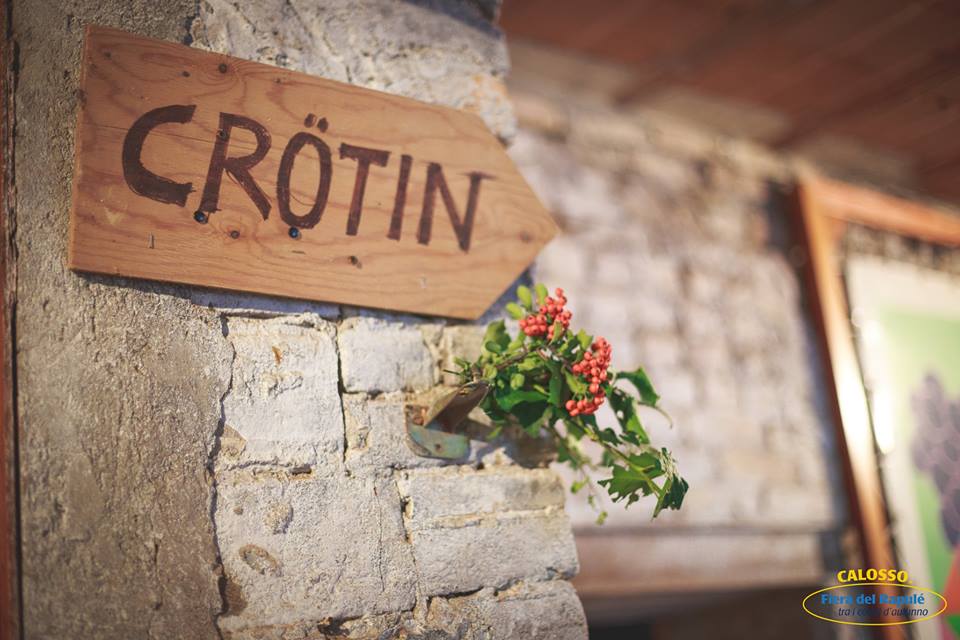
Framing the tastings is the magnificent atmosphere of the crotin, ancient cellars dug into the tufa that lie beneath most of the houses in the historic center; they guide visitors through an evocative itinerary that winds its way through the subsoil of the Calosso village.
Throughout the duration of the fair, streets and squares of the historic center are enlivened by performers, street artists, storytellers and, on Sundays, a colorful and diverse Zero Mile Market, on whose stalls are displayed various products belonging to the short supply chain.
The Fiera del Rapulé is undoubtedly a fair that has seen its importance and popularity grow beyond the borders of the small village community, an event that would certainly be impossible without the fundamental contribution of many Calosso locals who year after year put forth their commitment, working with enthusiasm, carefully attending to the smallest detail and constituting the strength capable of pushing this event toward ever more important goals.
The crotin
Crotin is the only currency accepted within the Fair route (1 Crotin = 1€) and can be used topurchase dishes, purchase wine tastings and purchase bottles at the exit of the route.
The exhibitions
During the tour, in addition to wine tastings and traditional dishes, it will be possible to visit several thematic exhibitions.
- Crotin Casa Irene: The journey of the soul. Psychoreading of the arcana. Artes Association.
- Botega D’La Tolera: Imprint by Massimo Testa.
- Crotin del teatro: The flow of the time works by Andres Avrè.
- Spazio ‘D Ginin: Creative workshop Armonia Gli Gnomi 2006 Association.
- Casa San Martino-Library: collective exhibition of artists.
- Crotin Montafia: The plastic house by Roberto Montafia.
- Palazzo Guaita: Infinite landscapes by Giancarlo Ferraris.
Music
During the days of the Fair musicians and artists will liven up the streets of the historic center.
The Calosso DOC
The Calosso DOC, one of Italy’s smallest and youngest appellations, was established in 2011 to protect a wine made from grapes of the Gamba Rossa variety, or known locally as Gamba di Pernice.
A rediscovered heritage of one of Piedmont’s oldest and rarest grape varieties, Gamba di Pernice owes its name to the distinctive bright red color of the stalk before veraison, reminiscent of partridge legs.
Once known in the Alba area as Pernicine, Gamba di Pernice, also known as Gamba Rossa or Imperatrice dalla Gamba Rossa, is a rare vine today, already attested by Nuvolone in 1798, tested by the Leardi Demaria survey around 1870 and given as typical of Alto Monferrato by Rovasenda in the same years.
Having almost disappeared in the 1900s, thanks to the stubbornness of some Calosso producers, after 12 years of experimentation with the University of Turin, it was replanted by several producers, becoming a flagship of Calosso viticulture, until the recognition in 2011 of the Calosso appellation.