


From 01 September 2026
to 24 September 2026
Chinese Calligraphy: The Beauty of Yin-Yang through Chengyu
Explore the philosophical roots and artistic beauty of Chinese characters and discover the depth of Chinese culture through brush and ink
Explore the philosophical roots and artistic beauty of Chinese characters and discover the depth of Chinese culture through brush and ink.
Chinese Calligraphy Course (Module 1)
This is the first module of the Chinese Language and Culture course, an activity of the Landscapes of Wine, Tea, and Coffee project.
The course is introductory, aimed at beginners, and has a practical and cross-disciplinary approach.
The course will then continue with a series of modules of progressively increasing levels.
Registration is mandatory by Wednesday, September 9, 2026.
We kindly ask you to book as soon as possible for organizational reasons (minimum 9/maximum 18 students).
The teaching method
Over 80% of Mandarin Chinese characters are composed of two elements: a radical (semantic key) and a phonetic component that indicates the pronunciation.
There are over two hundred radicals that identify the category of meaning, and the Chinese language functions mainly through the union of these elements into “families”.
Instead, Chengyu (成语, literally “set expression”) are the famous Chinese idioms. Typically formed by four characters.
These mottos derive from ancient literary, philosophical, and mythological texts or from historical episodes of Chinese tradition.
Module 1 begins with the Chinese theory of Yin-Yang and the Five Elements (Wu Xing).
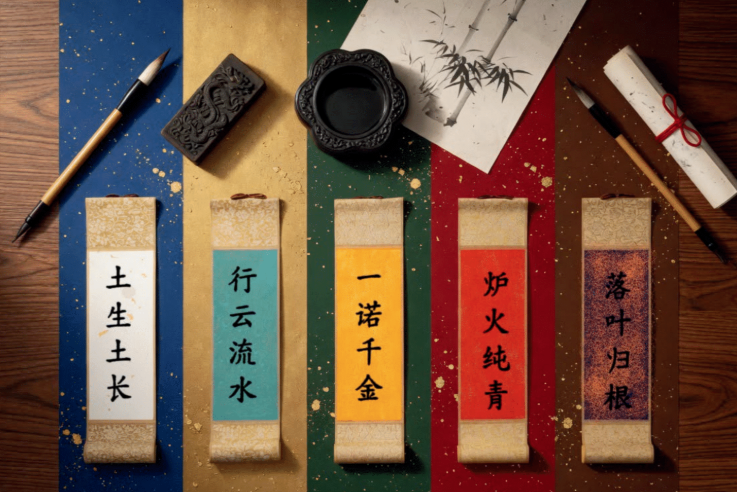
The course is structured into five lessons, each linked to one Element; in each, we will work on one Chengyu, whose characters descend from the radical of that Element, providing an opportunity to delve into an aspect of Chinese culture.
The instructor
Guo Hong was born in 1992 in Baotou (Inner Mongolia, China) and earned her degree from the Inner Mongolia University of Technology, later specializing at East China Normal University.
She has been in Italy since 2022 and has collaborated with the Confucius Institute of the University of Turin.
She also led the event‘Oasis of the Spirit: Tai Chi and Qi Gong in nature on May 30 at the Oasi dei Canapali.
Module 1 Program
课程简介 Course Presentation
本课程以中国古老的阴阳五行理论为基础,通过书法艺术带您深入了解汉字的构造智慧。五节课对应五行元素,遵循”土生金、金生水、水生木、木生火、火生土”的相生循环,让您在笔墨之间感受中华文化的深邃哲理。
This course is based on the ancient Chinese theory of Yin-Yang and the Five Elements (Wu Xing), guiding you through the art of calligraphy to deeply understand the wisdom in the construction of Chinese characters.
The five lessons correspond to the five elements, following the generative cycle “Earth generates Metal, Metal generates Water, Water generates Wood, Wood generates Fire, Fire generates Earth,” allowing you to feel the profound philosophy of Chinese culture between brush and ink.
五行 The Five Elements (Wu Xing)
五行理论认为宇宙万物由五种基本元素构成,它们之间存在相生相克的关系:
The theory of the Five Elements holds that all things in the universe are composed of five fundamental elements, which have relationships of mutual generation and control:
相生循环
Generative Cycle:
- 土生金 – Earth generates Metal (minerals are hidden in the earth)
- 金生水 – Metal generates Water (metal condenses dew)
- 水生木 – Water generates Wood (water nourishes wood growth)
- 木生火 – Wood generates Fire (wood feeds the fire)
- 火生土 – Fire generates Earth (ashes become earth)
五行特性
Characteristics of the Five Elements:
| Element | Nature | Direction | Season | Virtue |
| 土 Earth | supporting, generating | Center | Late summer | Trust |
| 金 Metal | solidity, transformation | West | Autumn | Justice |
| 水 Water | flowing, wisdom | North | Winter | Wisdom |
| 木 Wood | growth, benevolence | East | Spring | Benevolence |
| 火 Fire | brightness, propriety | South | Summer | Propriety |
Registration and poster
To download the reminder poster in A4 format click here.
Registration is mandatory by Wednesday, September 9 and is done by filling out the booking form at the link.
Reservations are mandatory (minimum 9 participants, maximum 18 participants).
We kindly ask for the earliest possible notice due to the minimum/maximum number of participants and for better organization.
When it takes place
The five lessons are scheduled from 7:30 PM to 9:00 PM on Mondays and Thursdays
- Thursday, September 10
- Monday, September 14
- Thursday, September 17
- Monday, September 21
- Thursday, September 24
The lesson times may be slightly modified upon a shared proposal accepted unanimously by the participants at the first lesson.